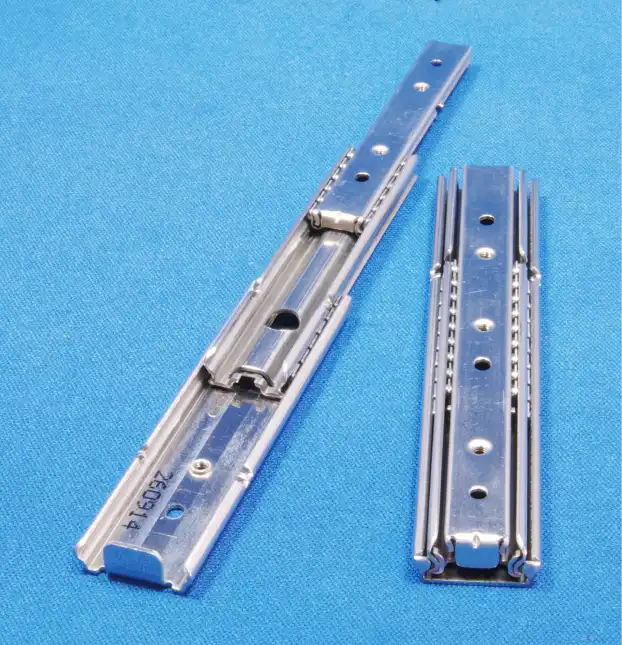
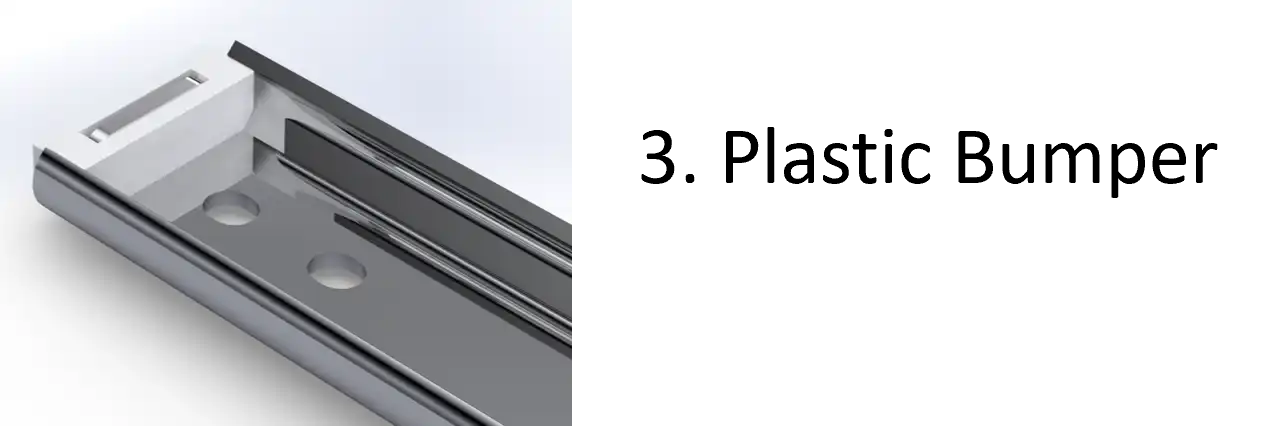
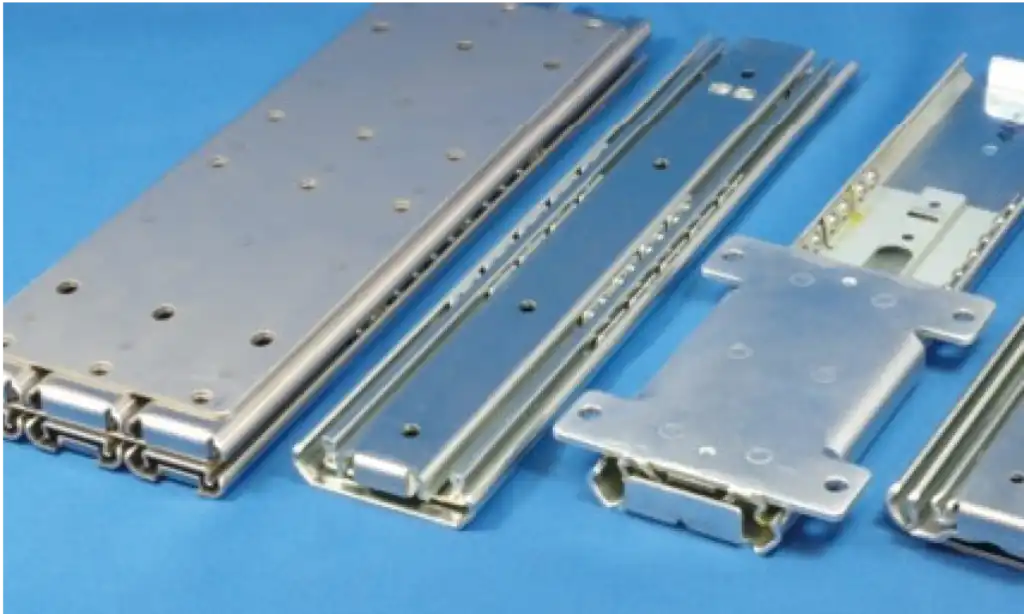
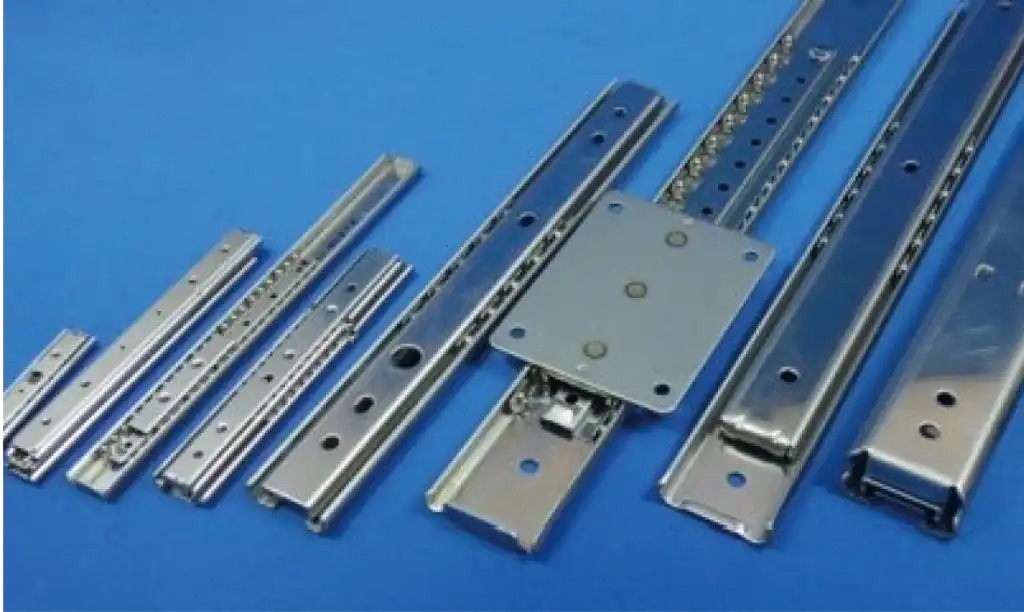
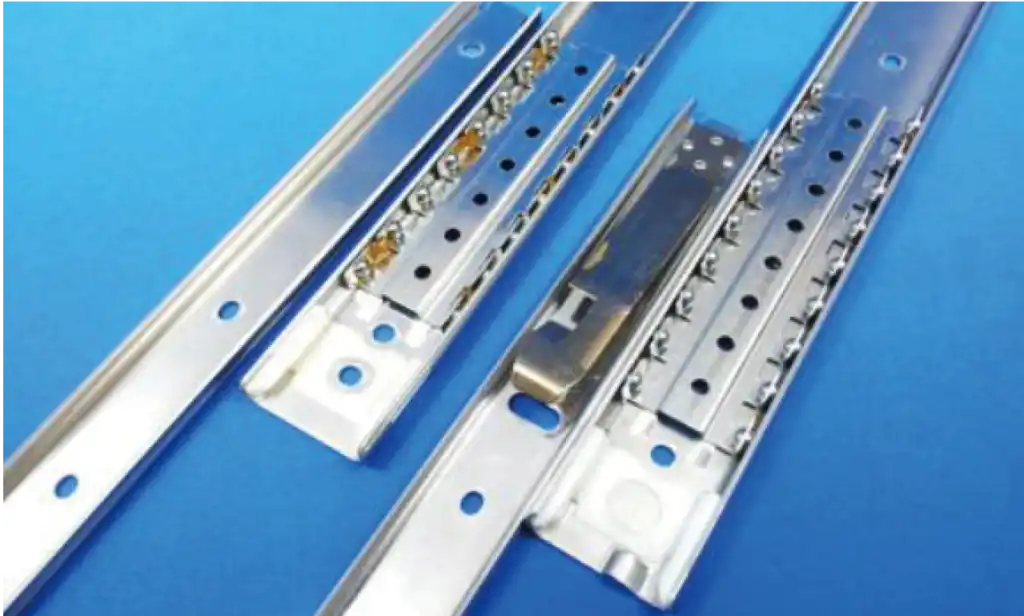
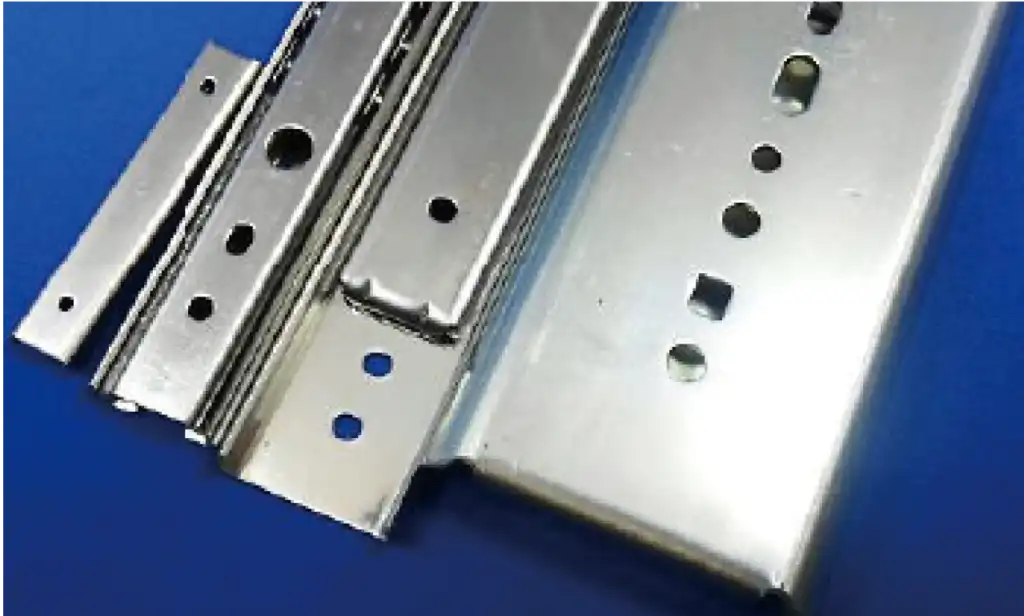
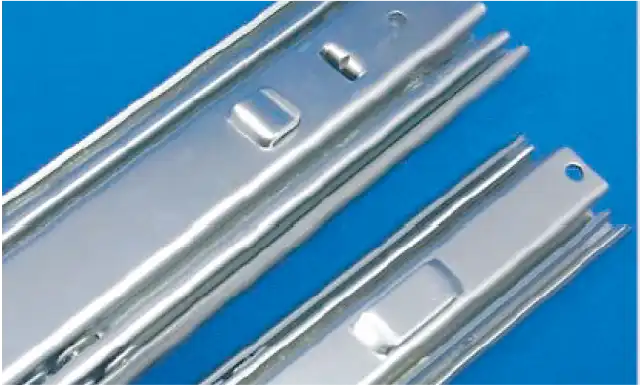
A slide rail is a linear mechanical part that moves heavy objects with minimal force. It is commonly known as a drawer slide or ball bearing slide.
Basic Structure of Slide Rails
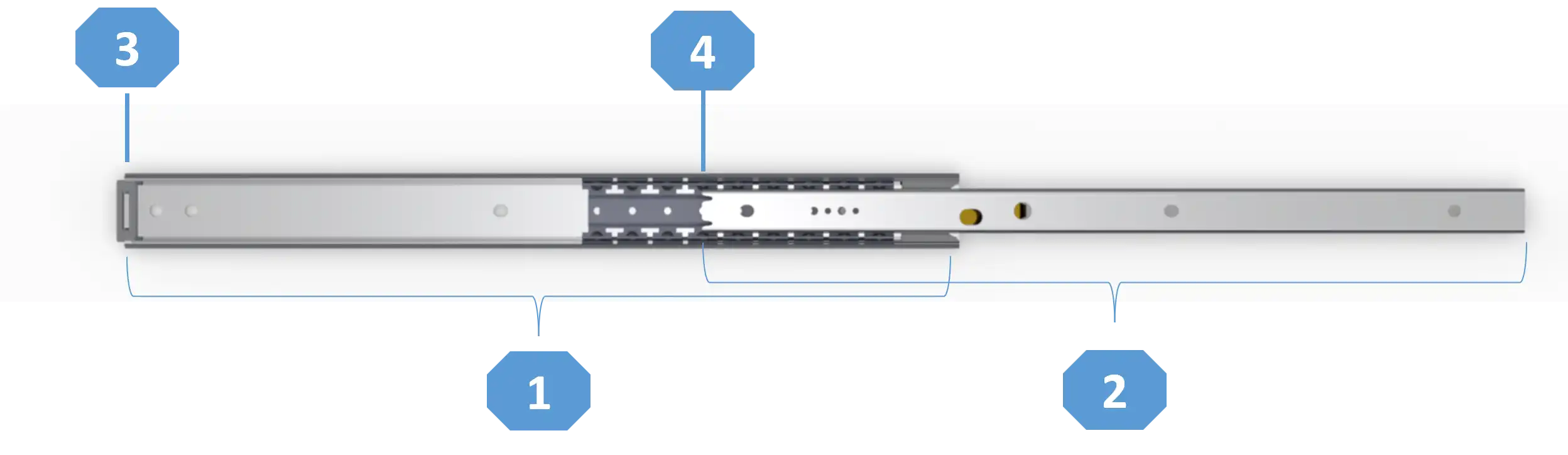
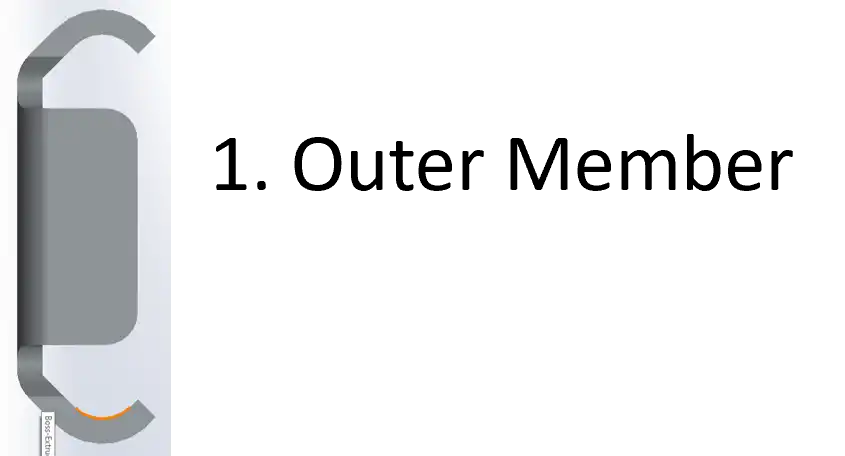
1
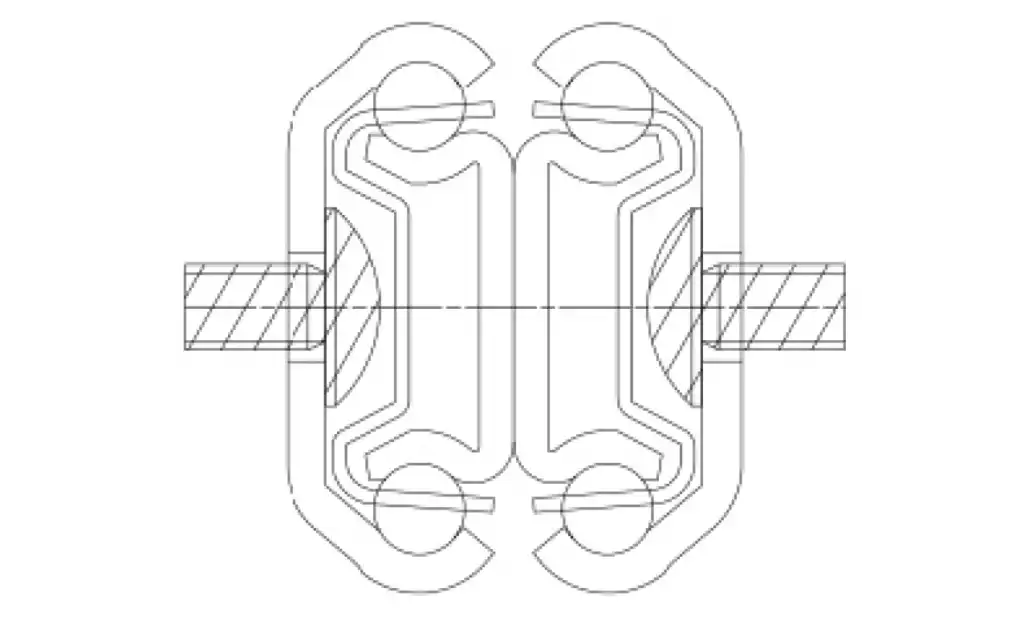
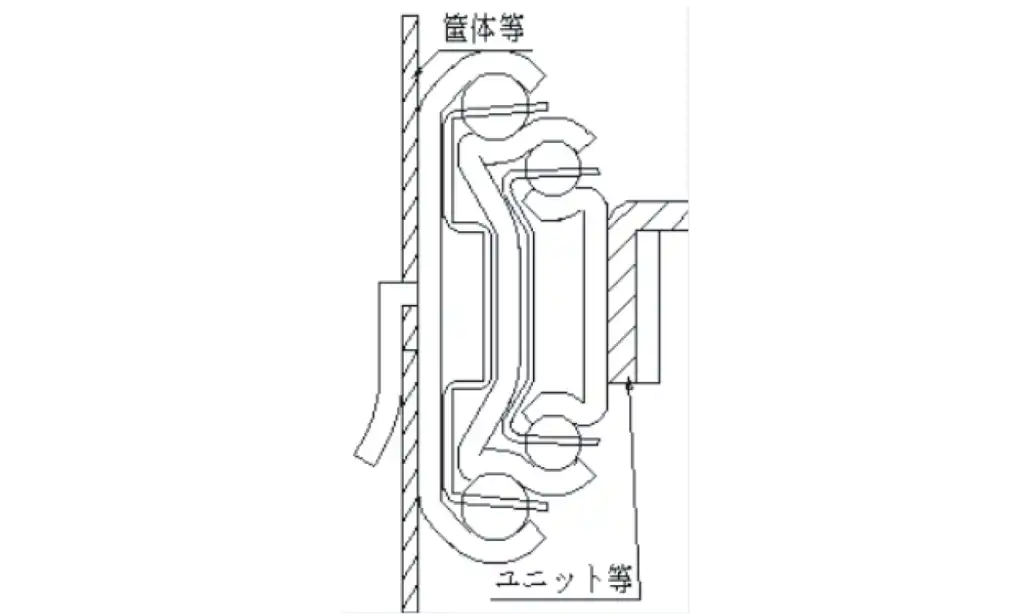
Outer Member
A rail member attached to a fixed surface, such as the body. Commonly, it is also called a cabinet member because it is attached to a cabinet.
2
Inner Member
Inner member is a rail part that attaches to a box or object that you want to slide, such as a drawer. It is generally attached to a drawer and is also called a drawer member.
3
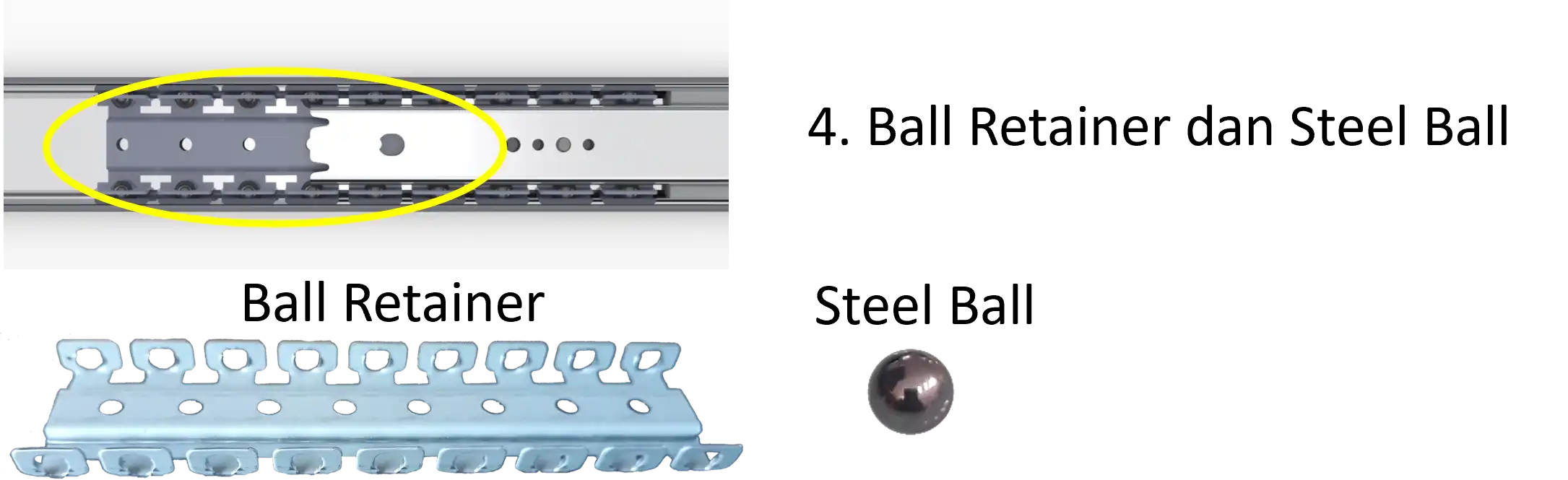
Ball Retainer
A rail part to hold (retain) the balls in the correct position.Occasionally, it's easier to call it as a retainer, without mentioning the word 'ball'.
4
Steel ball
Steel ball usually integrated into the ball retainer.Furthermore, when the rail (inner member) moves, the ball will move automatically, and followed by smooth rail movement with minimal force.
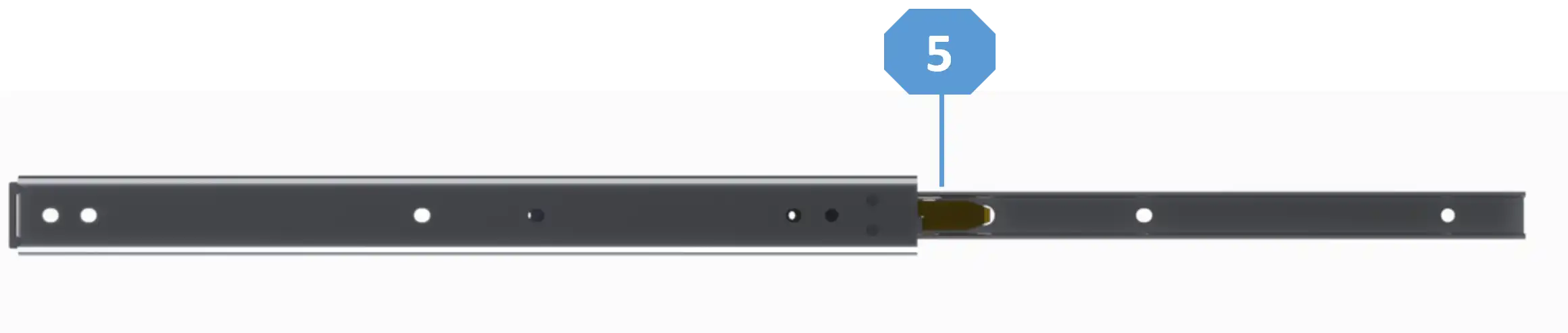
5
Disconnect Spring
A part to connects the outer member and inner member, or the inner member and center member. It usually also has several system functions, such as as a lock.
Slide Rail Insights
Kinds of Slide Rail
Generally speaking, slide rails refer to rails with built-in ball retainers, and our slide rails are of this type.
Slide Rail Type (Structure)
Single Slide
A slide rail consisting of an outer member and an inner member. Also called a two-member slide.
Double Slide
A slide rail consisting of two single slides stacked and fixed together. It is a type of three-member slide.
Three-member Slide
A slide rail consisting of an outer member, inner member, and intermediate member.
Two Way Slide
A rail that allows movement in both forward and backward directions. Also known as 2-way travel.
Linear Slide
A type in which the inner member always moves within the outer member.
Slide Rail Material
Most slide rails are primarily made from SPCC (cold-rolled steel plate). Even for rails of the same size, plate thickness can vary depending on the manufacturer, which can result in differences in durability and price. Some manufacturers, including ours, make stainless steel slide rails, but there are not many manufacturers worldwide that have established manufacturing technology.
Steel Slide Rails
In addition to rail sizes and types, there is also a wide variety of mechanical parts, which allows for a wide range of design possibilities.
Stainless Steel slide Rail
It is ideal for places where the properties of stainless steel can be utilized, such as humid environments.
Typical Slide Rail Mechanisms
The appeal of slide rails is that they can be given various functions by adding additional parts. Here we will introduce some typical mechanisms.
Pulling Mechanism
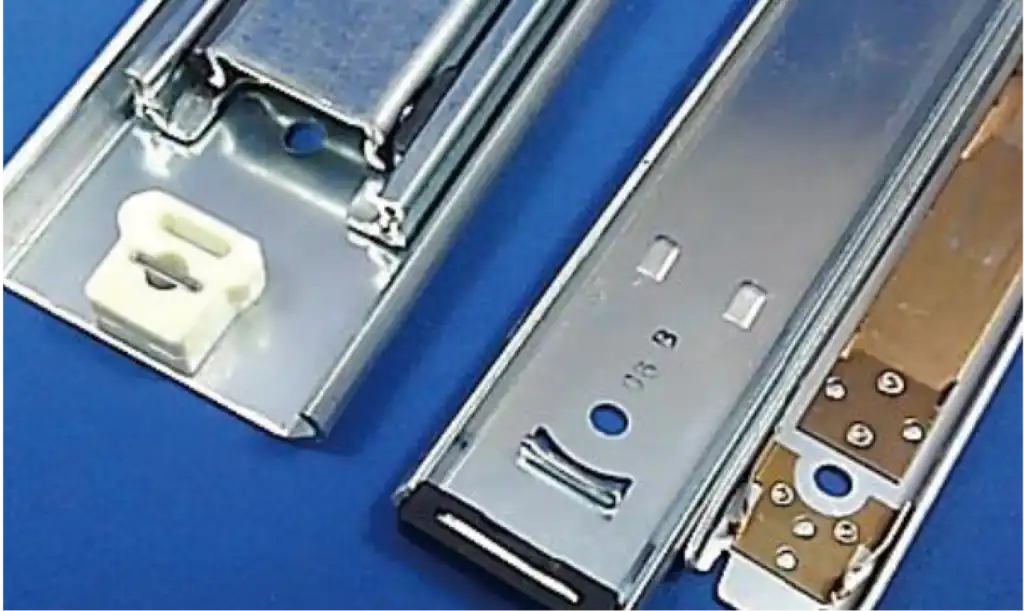
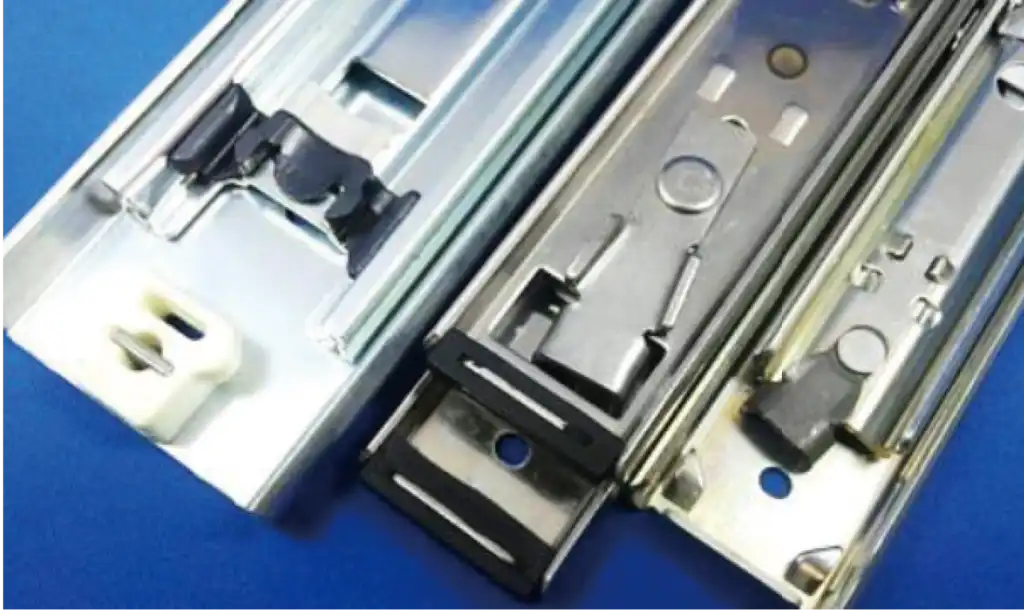
There are two types: a spring-operated pull-out type (using metal or resin) and a friction-resistance type (without springs). The friction-resistance type can only be manufactured by manufacturers with high-level technical expertise in rail precision.
Silence Mechanism
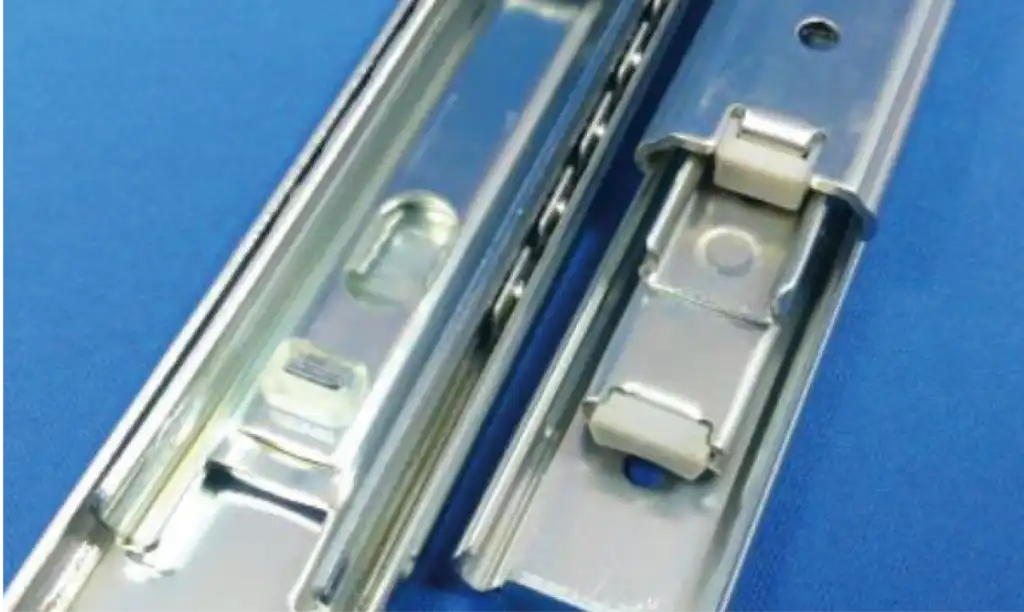
Resin is used to eliminate the impact noise of metal, and in some cases it also has impact resistance.
Retention Mechanism
It exists both when stored and when pulled out.
Sequential Mechanism
Correcting rail movement extends the expected life of the rail.
Regarding Fixing Method
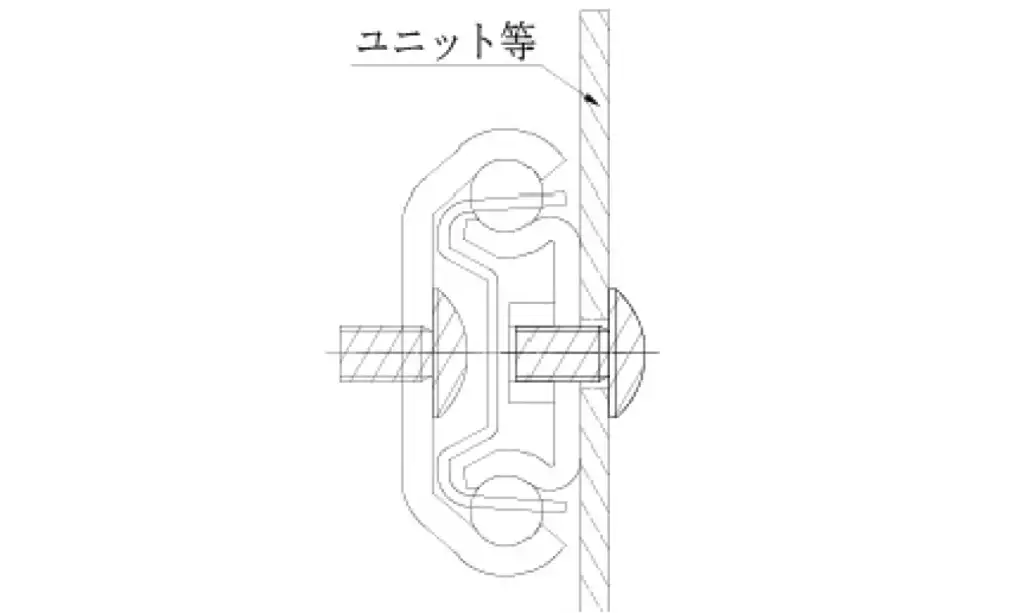
Most slide rails are typically secured with screws via mounting holes, but some can be secured in a different way.
Screw-on type
It has holes of the corresponding size.
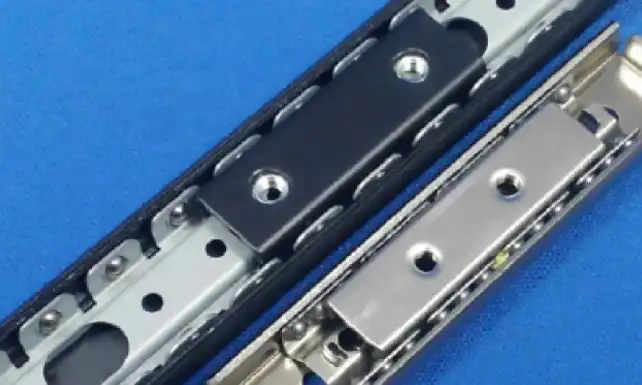
Nut burring type
The screw head will be on the outside of the rail.
Tab pocket type
This reduces assembly time during mass production and lowers operating costs.